“Best voting advice: Voting isn’t marriage. It’s public transport. You’re not waiting for "the one". You’re getting on the bus. And if there isn’t one going exactly to your destination, you don’t stay home and sulk. You take the one that’s going closest to where you want to be.”
U.S. Senate General, Open U.S. Representative Primary, & Open Primary
Election Day is Tuesday, November 3
Polls are open from
6:00 AM - 8:00 PM
You must bring one of the following:*
- Driver’s license
- Louisiana Special ID*
- LA Wallet Digital Driver’s License
- A recognized picture ID that contains your name and signature
* A Louisiana Special ID can be obtained at the Office of Motor Vehicles by showing your voter information card. If you have misplaced it, you can print a new one online at geauxvote.com or request one from your registrar of voters.
* If you do not have any of the above, you can still cast your vote by signature on a voter affidavit.
An Early Vote is a Powerful Vote: October 20-27
(Excluding Sundays)
- Polls are open from
8:30 AM - 6:00 PM - Find your polling place at GeauxVote.com
Vote by Mail Request a Ballot by October 30
- Ballots can be requested from your local registrar of voters.
- Ballots should be returned by November 2 at 4:00 PM
- Because of USPS changes, if you are mailing your ballot, you must mail it by October 30 to be postmarked by November 3.
- Find out if you are eligible at GeauxVote.com
What's At Stake In 2026
Beginning in 2026, Louisiana will implement a new closed partisan primary and runoff system for congressional races, Louisiana Supreme Court elections, Public Service Commission races, and Board of Elementary and Secondary Education contests. This shift changes how candidates advance to the general election and makes voter participation in the primary process more important than ever.
In 2026, Louisiana voters will help shape the future of our state at every level of government. Voters will elect one member of the U.S. Senate and all six of Louisiana’s seats in the U.S. House of Representatives, along with leaders for the Louisiana Supreme Court, the Public Service Commission, and the Board of Elementary and Secondary Education. Across the state, voters will also participate in municipal elections, school board races, judicial contests, and other local offices, while weighing in on statewide and local ballot measures that could impact policy and public resources across Louisiana.
The stakes could not be higher. Decisions made in Washington, at the State Capitol, and in our courts shape everything from voting rights and education to environmental protections, economic opportunity, and the resources our communities rely on every day. The officials elected in 2026 will help determine how power is exercised in Louisiana and whose voices are heard in those decisions.
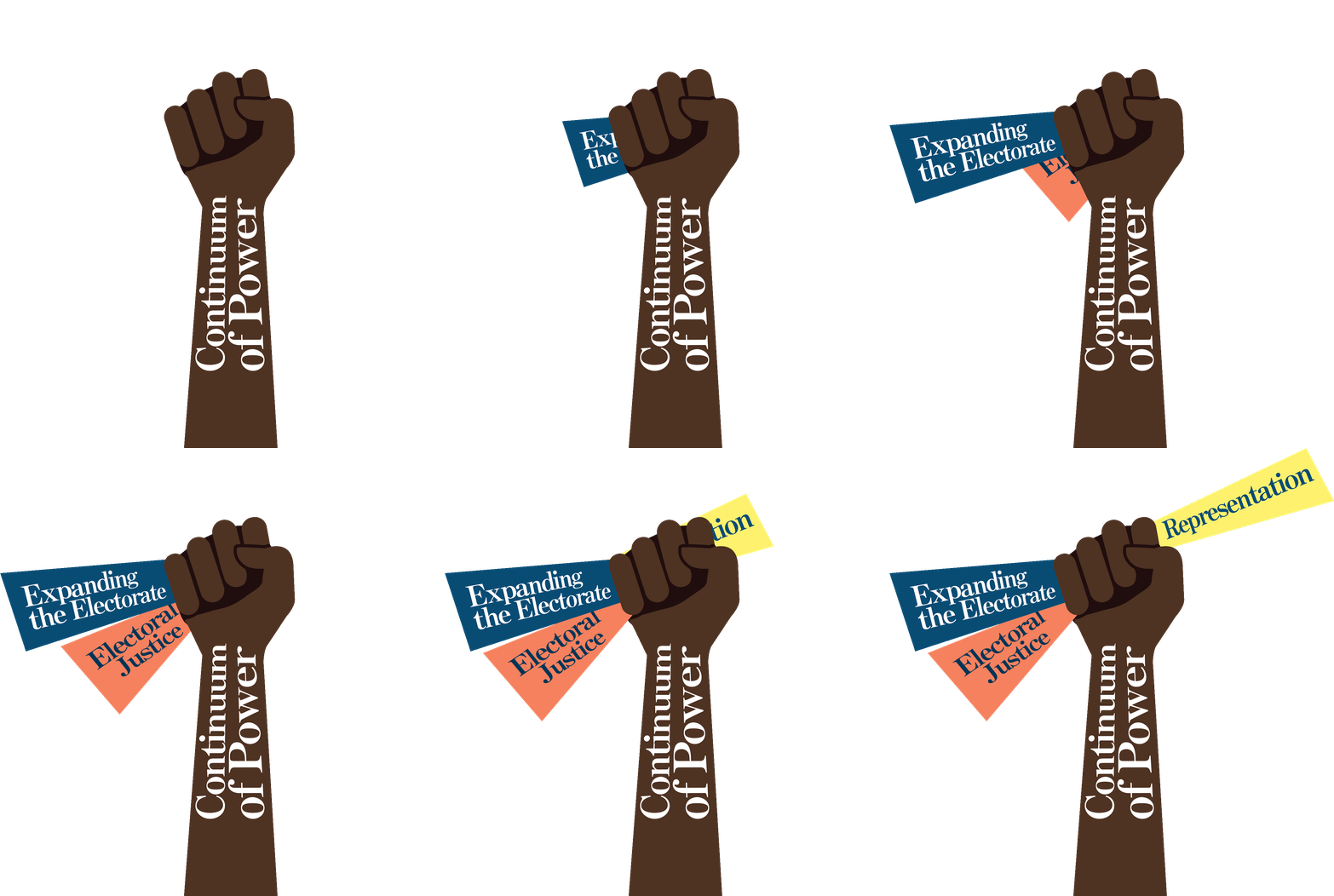
For more than a decade, Power Coalition for Electoral Justice and our partners have been building power across communities of color and communities historically excluded from the political process. We know that when voters participate, communities are stronger and government is more accountable.
In 2026, Louisiana voters have an opportunity to shape the direction of our state. By participating in elections and making informed choices at the ballot box, voters can help build the communities—and the future—that all Louisianans deserve.